
Hard Drive Disposal Service for Secure Data Destruction and Compliance
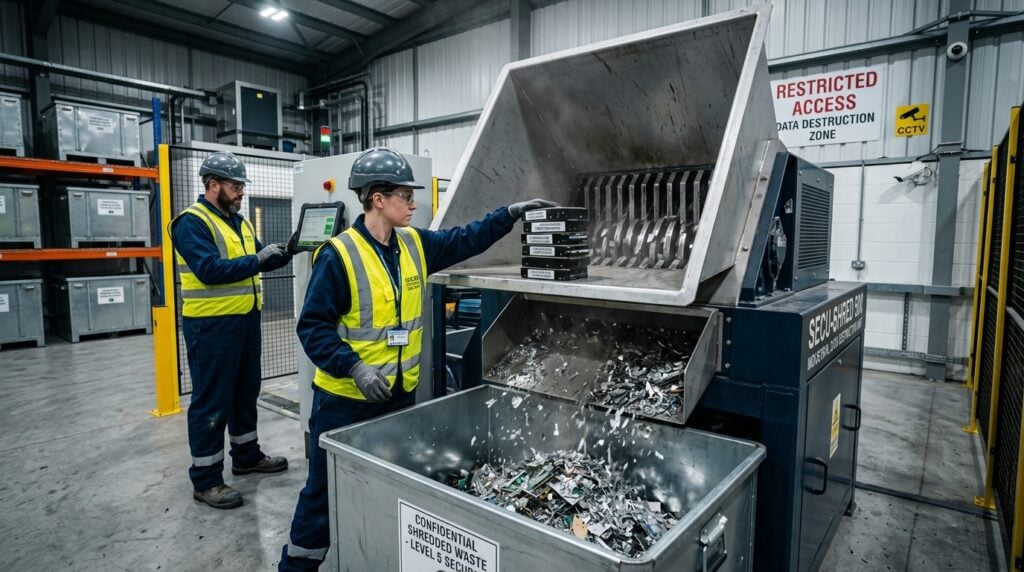
Hard drive disposal service is a need that catches organisations off guard more often than it should. Equipment reaches end-of-life, IT staff reformat the drives or perform a factory reset, and the hardware is donated, sold, or sent to an e-waste bin. What appears to be a responsible disposal becomes a data liability waiting to surface. Reformatting does not destroy data. Factory resets leave recoverable files on devices. And once equipment leaves the organisation without certified data destruction, the organisation loses control of what happens next.
Why Consumer Deletion Methods Are Not Enough
Standard deletion, formatting, and factory reset operations modify the file system rather than the underlying data. The file allocation table is updated to mark space as available, but the actual bytes on the platter or flash memory remain in place until new data physically overwrites them. Free data recovery tools available at no cost can restore files from a reformatted drive in minutes. Forensic-grade tools, used by investigators and sophisticated buyers of secondhand equipment, can recover data even from drives that have been reformatted multiple times through standard methods.
For a hard drive that has processed payroll records, client databases, email archives, or financial data, the exposure created by inadequate disposal is not theoretical. Recovery from improperly disposed corporate equipment is a documented category of data breach with real-world consequences for the organisations involved.
What Certified Hard Drive Destruction Involves
Professional hard drive disposal service uses methods specifically designed to defeat recovery regardless of the tools applied. Two primary approaches are used depending on whether the drive will be remarketed after treatment or physically destroyed.
Software-based data wiping to NIST Special Publication 800-88 standards overwrites all sectors of the drive with meaningless data, making forensic recovery impossible. This method is appropriate for drives going to resale after treatment and generates a destruction certificate per drive documenting the serial number, method, and completion confirmation.
Physical destruction methods are used where software wiping cannot be applied – damaged drives, drives with hardware faults, or situations where organisational policy or security classification requires destruction rather than wiping. Degaussing uses a high-powered magnetic field to scramble the drive’s magnetic domains. Hard drive shredding reduces the drive to metal fragments below the size at which any reconstruction is possible. Both methods generate documentation confirming destruction.
PDPA Compliance and What It Requires
Singapore’s Personal Data Protection Act creates a clear obligation for organisations disposing of storage media. Personal data must be destroyed in a way that makes recovery impossible before the media leaves the organisation’s control. The Personal Data Protection Commission has made clear through enforcement actions that this obligation applies to physical storage media at end-of-life, and that poor disposal practices resulting in data exposure constitute PDPA breaches.
Organisations can review PDPC guidelines on data protection obligations to confirm the specific requirements applicable to their situation. As Minister for Digital Development Josephine Teo has noted, “Data protection is not a checkbox – it requires organisations to close every gap.” The disposal gap is one that enforcement investigations have repeatedly highlighted.
TD ITAD provides certified hard drive disposal services in Singapore with per-device destruction documentation and a chain of custody record covering every stage from collection through destruction. Their services cover both software-based wiping for drives going to resale and physical destruction for drives requiring the highest level of assurance.
Which Drives Require Treatment
The scope of a proper hard drive disposal programme extends beyond the obvious cases.
- Desktop and laptop hard drives and solid-state drives
- Server drives, including individual disks within RAID arrays
- Network-attached storage drives
- External portable drives and USB storage
- Photocopier and multifunction printer drives, which retain images of documents processed
- Mobile device storage, including smartphones and tablets
- Backup tapes used in archive or disaster recovery systems
Each of these categories has been the source of documented data breaches when disposed of without certified destruction. The multifunction printer is particularly overlooked: modern office printers contain drives that store copies of every document scanned, printed, or faxed through them.
Chain of Custody Documentation
The documentation generated by certified hard drive destruction is as important as the destruction itself. For regulatory compliance, insurance purposes, and internal audit, an organisation needs to demonstrate that specific drives were destroyed in a specific way on a specific date. This chain of custody record is the evidence that satisfies an auditor’s question and withstands a data protection investigation.
Organisations that rely on informal disposal arrangements without documentation are exposed in a way that becomes clear only when that documentation is requested. Building the paper trail into the disposal process from the start is the only way to ensure it exists when needed.
Related Posts


About The Author